2010년 3월 24일 수요일

Recipe:Chicken Juk(닭죽)

Soup is called "Juk" in Korean. Most people think that Juk is only for babies or patients because it is well-digestible food. However, In Josen Dynasty, Kings' appetizer was various kinds of Juk . Moerover, Juk is good for people who go on a diet! One thing more I can say is that there is famous home remedy, when it comes to "Cold" in Western culture. That is "Chicken soup!" But Korean Chicken soup is a little bit differ from normal chicken soup, by reason of ingredients, cooking methods and taste.
There are three ways of cooking chicken juk!

※ The 1st Recipe (It is very similar to make Samgyetang.)

- Preparation Time : 1hour and 30 minutes
- Cooking Time : 2 hours, serving size: 1~2

▷ Ingredients
chicken stock :1~1.5kg chicken, roots of ginseng, 15 Cups water,
5 jujubes, 3 cloves garlic,
2Cups glutinous rice, 1ts finely chopped carrot, 1ts finely chopped leek,
salt, pepper

▷ Recipe

1. Rinse and place rice with clean water in a large bowl, about 1 hour
2. Wash and peel garlic, rinse jujubes. Drain
3. Wash ginseng thoroughly
4. Rinse chicken thoroughly inside and outside.
5. Place chicken, garlic, jujubes and ginseng in a large pan. Add water.
5. Boil over high heat for 10 minutes then cook with lid on over low heat until tender, about 1 hour.
6. Lift chicken out.
After removing chicken from pan and cooling, shred flesh coarsely.
7. Place chicken flesh and rice in a large heavy-based pan.
Add chicken stock.
8. Simmer uncovered for 15 minutes with stirring
9. Serve with finely chopped leek and carrot as decoration.
Add salt and pepper.

Recipe:Bossam Kimchi(보쌈김치)

It is surely that Kimchi is Korea's number one dish. It is proved that Kimchi is good for our health. (You know, Kimchi is the best vaccine to prevent SARS.) Also, people cannot forget its unforgettable taste. There are hundreds kinds of Kimchis out there, depending on each region, each family. Among them, Bossam Kimchi is famous for everyone. "Bossam" refers to wrap something in a cloth. As you know what is Bossam, Bossam Kimchi is "wrapped cabbage with cabbage leaves" and contains various sorts of ingredients from chestnuts to sliced beef or whatever you like. In this month, why don't you make Kimchi and take a big scoop of rice then eat yummy Bossam Kimchi?

Preparation Time : 5 hoursCooking Time : more than 1hour │Serves: 3~4

▷ Ingredients

5 Chinese Cabbage, 1Cup of salt
Filling-1 Radish, a bunch of parsley, a bunch of leaf mustard, 2 pears, 500g shrimp, 100g ginger, 3 cloves of garlic, 1 Cup of hot pepper powder, 1/2Cup of shredded red pepper, 1Cup of salted shrimp, 1 leek 6 shiitake mushrooms, 1/2Cup of pine-nuts, 10 chestnuts

▷ Preparation

1. Halve cabbage and salt in about 4 hours.Turn cabbage over every 40min.
2. Peel and core out pears.
3. Cut radish and pear into 0.5mm strips.
4. Wash parsley and leaf mustard. Cut them in 3cm length.
5. Remove heads, tails and shell from shrimps.
6. Slit down back of shrimp and remove center vein.
Cut in half. Rapidly soak in brine then rinse and drain.
7. Slice mushrooms into 0.5mm.
8. Peel chestnuts, ginger and pine nuts. Cut thinly strips.
9. Wash leek and cut in 2cm length.
10. Wash garlic and cut in half.

▷ Recipe

1. Wash cabbage thoroughly. Drain.
2. Cut the outer leaves of cabbage which is a cover of Bossam Kimchi.
3. Mix ingredients (radish, parsley, leaf mustard, pear, shrimp, leek, hot pepper powder, garlic, ginger and salted shrimp) with hands until well combined.)
4. Arrange cabbage leaves like a platter.
5. Scoop one Tablespoon of 3.
Spread out side of cabbage leaf with 3. mixture.
6. Sprinkle mushroom, chestnuts and pine nuts over top of mixture before cover with the next leaf.
7. Repeat 5. and 6.
8. Press 2 outer leaves around over seasoned cabbage to enclose.
9. Ferment at least 3 days in 20 degrees in Celsius. And serve.

Recipe:Dakdoritang(닭도리탕)

Nowadays, "Chicken" means fried chicken, simultaneously, a lot of people may think "KFC" or something likes that. But I am telling you that frying something is not like Korean recipe. Of course, some Korean cuisine needs to roast, fry and sometimes bake. Needless to say, however, "Tang" is one of the well-known styles when it comes to Korean dishes. "Dakdori-tang" is also "tang." It is somewhat hot but visitors love it because of juicy chicken unlike barbequed chicken. If you have a chance to invite a friend and serve "Dakdori-tang," it would be a yummy dinner.

Preparation Time:40 minutes │Cooking Time : 80 minutes │Serves: 3~4

▷ Ingredients

1~1.5kg chicken, 1 Cup water, 2 Potatoes, 1/2 Carrot, 2 Onions, 3 Green peppers, 2 Red peppers, 10 Sesame leaves, 1Ts Clear strained rice wine, 2Ts Sesame oil, Salt, pepper

※ Seasoning-3Ts Red pepper paste, 3Ts Red pepper powder, 3Ts Chopped leek, 2Ts Chopped garlic, 2ts Soy sauce, 1Ts Sesame oil, 1Ts Ground sesame, Pepper

▷ Recipe

1. Peel potatoes, carrot and onion, rinse. Cut into 2cm cubes.
2. Wash red peppers, green peppers and sesame leaves. Drain.
3. Cut each chicken into 10 portions, remove and discard any offal.
4. Trim chicken of excess fat and place in a medium bowl.
Add salt, pepper, and clear strained rice wine. Mix.
5. Cut red peppers and green peppers diagonally.
Cut sesame leaves into long thin slices.
6. Make seasoning.
7. Place chicken portions into a pan. Brown on all sides.
8. Add sesame oil, potatoes, carrot and onion. Cook.
9. Add water and seasoning, cover.
10. Bring to the boil reduce heat. Simmer gently until chicken is tender.
11. Add sliced peppers and sesame leaves. Simmer for 2 minutes.
12. Serve immediately with stock.

2010년 3월 23일 화요일

Recipe:Tteokjjim(떡찜)

Do you know Garaetteok? It is a long, white and very chewy rice cake. Traditionally, it has the meaning of "Long life." Thus, on Lunar New year's Day, Korean people make a dish called "Tteokguk" using GaraeTteok for their longevity. Tteokjjim is also made of long Tteoks. (Actually, it was one of the King's meals. In the past, many Kings rarely did any exercise so they frequently suffered from indigestion. Therefore, cooks created Tteokjjim which would not be a burden to the King's digestion despite containing beef.)

Generally, most families used the rest of Tteoks that were left behind after making Tteokguk, to make Tteokjjim. But nowadays, Tteokjjim is one of the greatest snacks between meals.
So, it is not called "Leftovers" any more.

Preparation Time : 30 min │ Cooking Time : 20 min │ Serves : 4

▷ Ingredients

6 long slender white rice-cakes, 20cm length, 100g chopped beef, 1 Cup water, 1 Onion

※ marinade for beef-1 Tsp soy sauce, 1tsp ground sesame, 1tsp sesame oil, 1tsp chopped garlic, 1tsp chopped leek, 2Tsp pine nuts

※ Condiments-5Tsp soy sauce, 2Tsp sugar, 2Tsp chopped leek, 2Tsp chopped garlic, 2Tsp sesame oil, 2Tsp ground sesame

▷ Preparation

Cut long rice-cakes (Tteok) into 4cm length. Make 2 slits into side of each Tteok piece with a sharp knife. (When you make a slit, do not cut Tteok in half.)

② Slice onion.

③ Mix condiments well.

④ Marinade beef.

▷ Recipe

Stuff slits with a teaspoon of beef and pine nuts.

② Place sliced onion in pan.

③ Add condiment and Tteok to the pan.

④ Pour water down side of pan. Simmer gently.

⑤ Toss Tteoks until they are well coated.

⑥ When Tteoks turn lightly golden, remove from heat.

(If you keep cooking Tteok, it will absorb stock and sauce will thicken.)

⑦ Spoon stock over Tteok. Serve.

Recipe:Tteokbokki(떡볶이)

Tteokbokki is easily found in the street. Teenagers gather up and enjoy it and even foreign visitors who are reluctant to eat spicy food, really like Tteokbokki. There are two kinds of Tteokbokki in Korea. One is very hot and spicy and it is called "Street style Tteokbokki." When it comes to this style, "Shindang-dong Tteokbokki" is famous. The other is "Goongjoong style (one of the The Emperor's meal)." Its taste is not so hot because it only uses soy sauce, not red pepper paste. No matter what Tteokbokki has different flavors; it is true that many people love it.

Preparation Time : 40 minutes │ Cooking Time : 12~15 minutes │Serves: 2

▷ Ingredients

3 Garae tteok-white rice cake for Tteokguk, 100g Boiled fish paste,1/2 carrot, 1 onion, 10 Sesame leaves
Seasoning - 1/2 Cup Anchovy stock, 1Ts soy sauce, 3Ts sugar, 2Ts red pepper paste,
1Ts red pepper powder, 1Ts chopped leek, 1Ts chopped garlic, 1ts sesame oil, ground pepper

▷ Recipe

1. Rinse sesame leaves and cut into 5cm length.
2. Divide tteok into 4 equal parts and cut them into 4~5cm length.
3. Soak tteok for 20 minutes.
4. Cut carrot, onion, boiled fish paste in 4~5cm slices.
5. Pour Anchovy stock in a pan, add carrot,onion, boiled fish paste, tteok and seasoning. Boil.
6. Add sesame leaves. Remove from pan.
7. Serve with egg soup.


※ Anchovy stock

* How to make Anchovy stock?
- Preparation:
10g sea tangle-seaweed, 10g dried Anchovy, 10g sliced radish, 7Cups water
- Recipe
1. Put sea tangle, radish, Anchovy and water in a pan and boil in 20 minutes.
2. Pick up sea tangle, radish, Anchovy. That's it!

* How to make egg soup?
- Preparation :
1 egg, 2Cups Anchovy stock, 1Cup water, 1Ts chopped leak, 1Ts soy sauce
- Recipe
1. Pour water, soy sauce and anchovy stock in a pan. Boil.
2. Mix yolk and white and add into pan.
3. Decorate with chopped leak and serve.

2010년 3월 22일 월요일

Recipe:Bulgogi(불고기)

Not only most tourists but also many Koreans love Bulgogi. It is sweet and juicy and also it takes short time to make this delicious one. That is why Bulgogi is ranked at the first place in the Korean food contest. When people eat Bulgogi, they often wrap it with lettuce, sesame leaves or other leaves. It brings more genuine taste and much nutrition when it compares to having only Bulgogi. From these reasons, as we are served with Bulgogi, we may be no more hungry, nutritionally and delightedly.

- Preparation Time : 30 minutes / - Cooking Time : 15 minutes
- Serving size: 3 people

▷ Ingredients


600g thin sliced tenderloin of beef
300g washed lettuce and sesame leaves
12 garlics, 6 mushrooms
1 green pepper, 1/2 large onion
3Ts sugar, 2Ts sesame oil


- Marinade
4Ts soy sauce,
4Ts chopped leek,
1ts chopped garlic,
2Ts ground sesame,
2Ts refined rice wine or coke, ground pepper

▷ Recipe

1. Remove aged leaves and wash well. Cut into 5 cm length.

2. Slice mushrooms, green pepper, onion and garlic.

3. Mix sliced tenderloin with sugar and sesame oil.

4. Combine soy sauce, chopped leek, chopped garlic, ground sesame, refined rice wine (or coke) and mix well in a bowl.

5. Move tenderloin into the bowl and marinate for 30minutes.

6. Preheat a large frying pan (or a grill) to moderately hot.
Add marinated loin on the pan, gradually.

7. Add sliced vegetables on the pan.

8. Cook over medium heat 2 minutes each side or until lightly golden.

9. Serve with lettuce and sesame leaves.


※ The Korean eating way is to wrap up bulgogi and grilled vegetables in lettuce or sesame leaves.


2010년 3월 16일 화요일

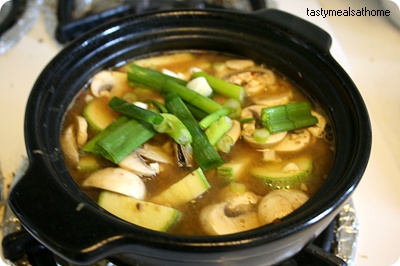
Recipe:Korean Bean Paste Stew/Soup(된장찌개)


Korean Bean Paste Stew (dwen jang jjigae) is a classic Korean dish that is equally, if not more, popular than the Korean Kimchi stew. It is commonly served with rice at the end of a Korean BBQ meal in a small stone pot. It is a delicious meal, but for foreigners, may be an acquired taste. Partly the reason is because of its smell. We got to admit, it is not the most pleasant smelling dish out there. However, if you can get past that, you will discover its rich flavor and become hooked on this stuff! To sum it up, think of this dish as a Korean Miso Soup/Stew. Give it a chance, and try this recipe out.

What You Will Need

- Korean Bean Paste (this can be found in a Korean grocery store) Japanese miso will not taste the same, so do not try to buy that!)
-Tofu (we used silken tofu, but you can use any kind of tofu)
-Korean Red Pepper Flakes (optional)
-Green Pepper/Fresh or jar Jalapeño
-Green Onion
-Asian Squash or zucchini
-Mushroom (any kind is fine)
-Garlic
-Mussel/clam/beef–Optional; you can use any one of those
-Dried Anchovies and Dried Seaweed


What to Do:
The first thing we need to do is make a broth for the stew. We used about 5-6 pieces of dried anchovies (can be found in Asian market) and 2 pieces of dried seaweed. If you don’t have this in your pantry, you can use just water and hon dashi, but we recommend investing in anchovies and seaweed because they are used as a base for broth for many Korean dishes. So, start by putting those in a pot with about 1 1/2 cup water and boil. After a few minutes into boiling you will definitely start to smell a ‘fishy’ smell. That’s exactly what you want.


While the water is boiling, you can start prepping your other goodies. Start by slicing the squash/zucchini into half moon shape. It really doesn’t matter how you slice it, but we like ours like this.

Also, slice your green onions and and mince the garlic (we used about 2). After that, slice your mushrooms (we used about 4) and mussel (if you’re using clam, we recommend you using the ones still in the shell and just putting them in whole).

Once the water has boiled for about 2-3 minutes, take out the anchovies and seaweed with a slotted spoon. Discard the anchovies and seaweed, we are done using them.

Now, take a big generous spoonful of the bean paste, and using the slotted spoon, put it into the water. You are trying to break the bean paste up, so that you won’t have clumps of bean paste floating in the water.

Now let that come to a boil and then insert the mushroom, zucchini/squash, garlic, half of the green onions, and mussels into the pot. Lower the heat to a simmer.

Now, we like to add in a little spice into our soup, and to do that, we sprinkle in some Korean red pepper flakes as well as some good ol’ jalapenos from a jar. Trust us, just do it.

Let the pot simmer for another 10-15 minutes. Meanwhile, chop a little of the tofu. We used this much.

Now put the tofu in. You don’t want to boil it for long because the tofu will start to enlarge like crazy. So, insert the tofu about 1 minute–right before you are about to serve the soup. Also put in the rest of the green onions.

Stir it up a little bit with a spoon and you are ready to serve! Enjoy!